Antique Baroque Chest Walnut Chestnut Italy XVIII Century - Central Italy, Early XVIII Century
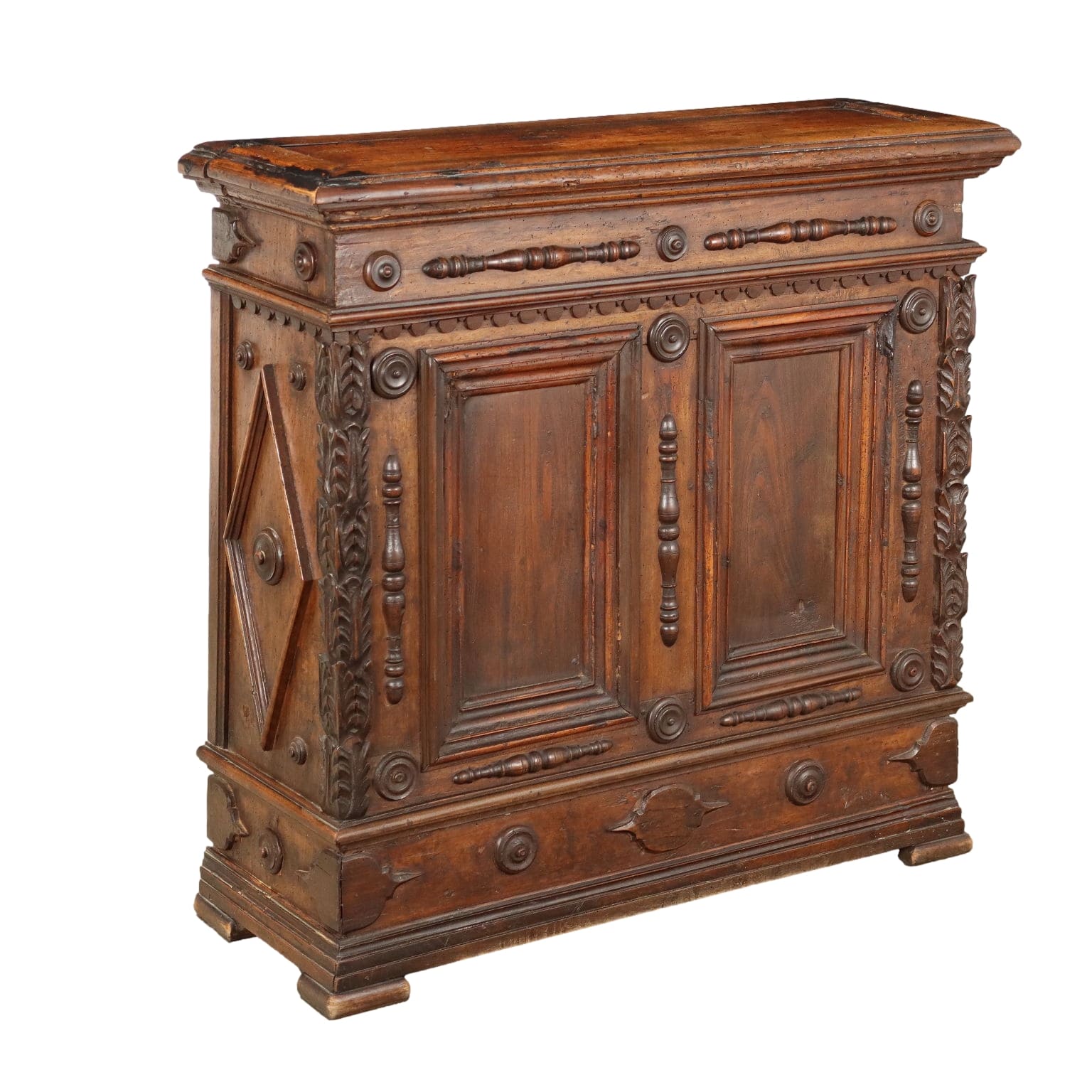
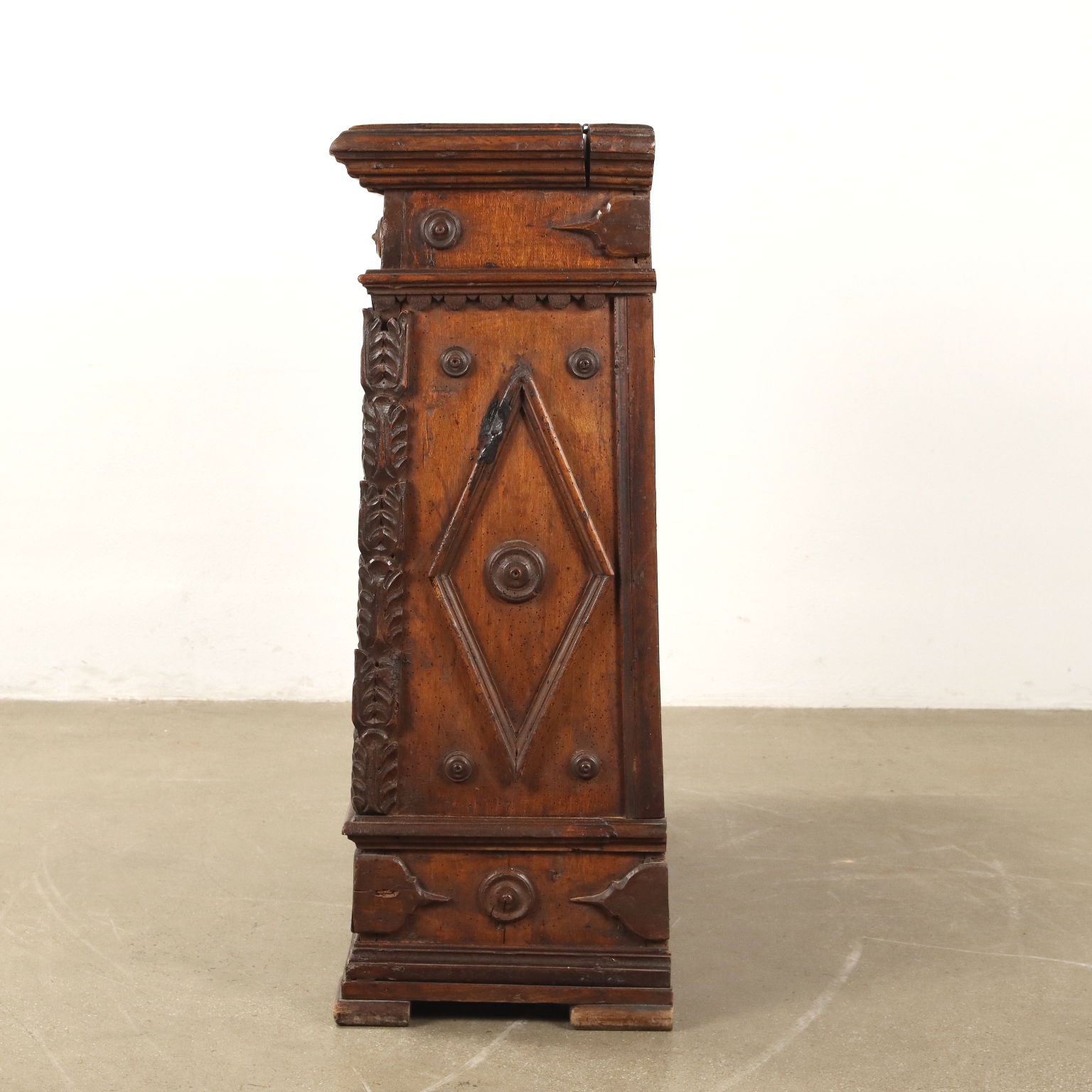

Central Italy, Early XVIII Century
Code: ANMOAL0251234

from 54.67 €/month for 15 months without interest Find out more


Features
Central Italy, Early XVIII Century
Style: Baroque (1630-1730)
Age: 18th Century / 1701 - 1800
Origin: Central Italy
Main essence: Chestnut , Walnut
Material: Carved Wood
Description
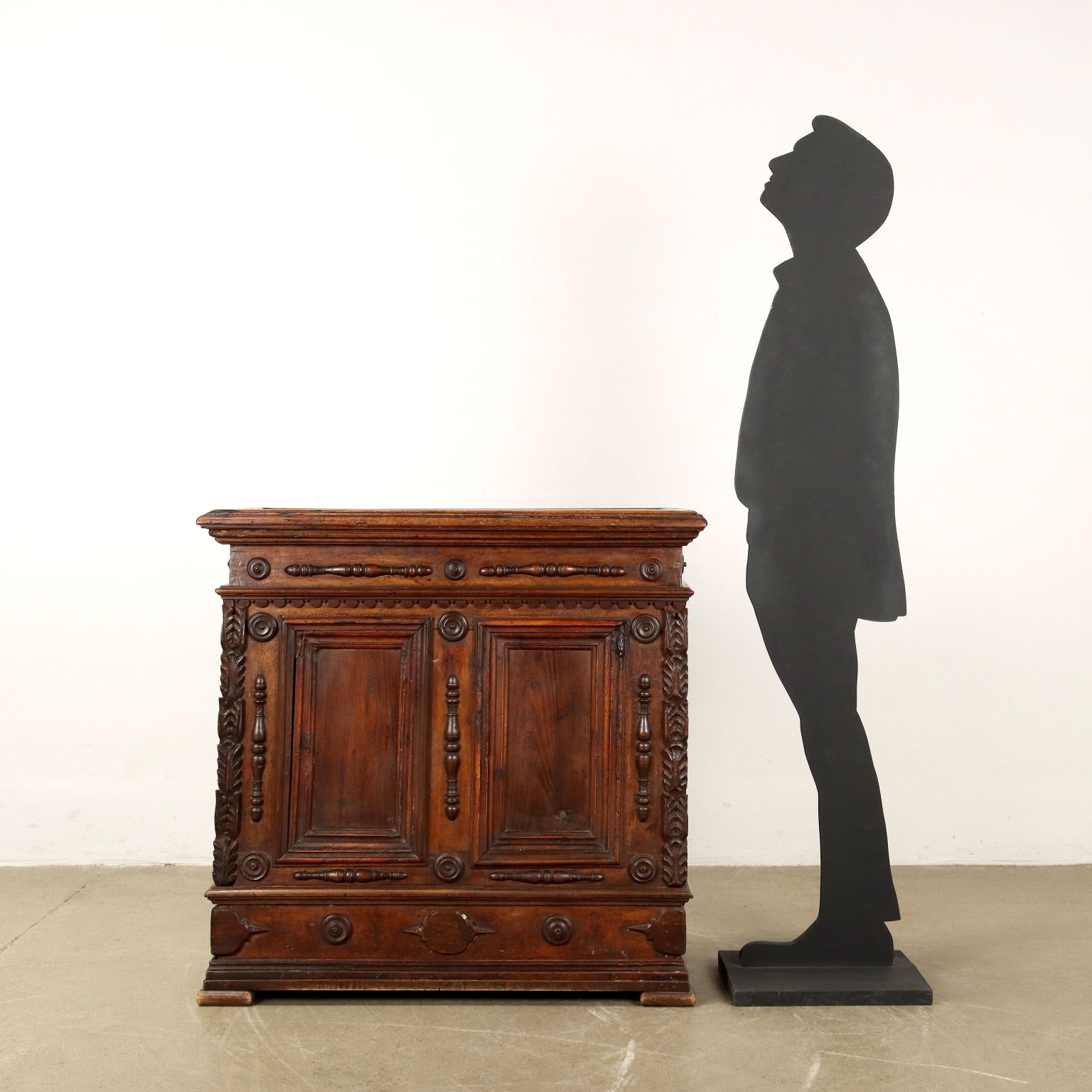
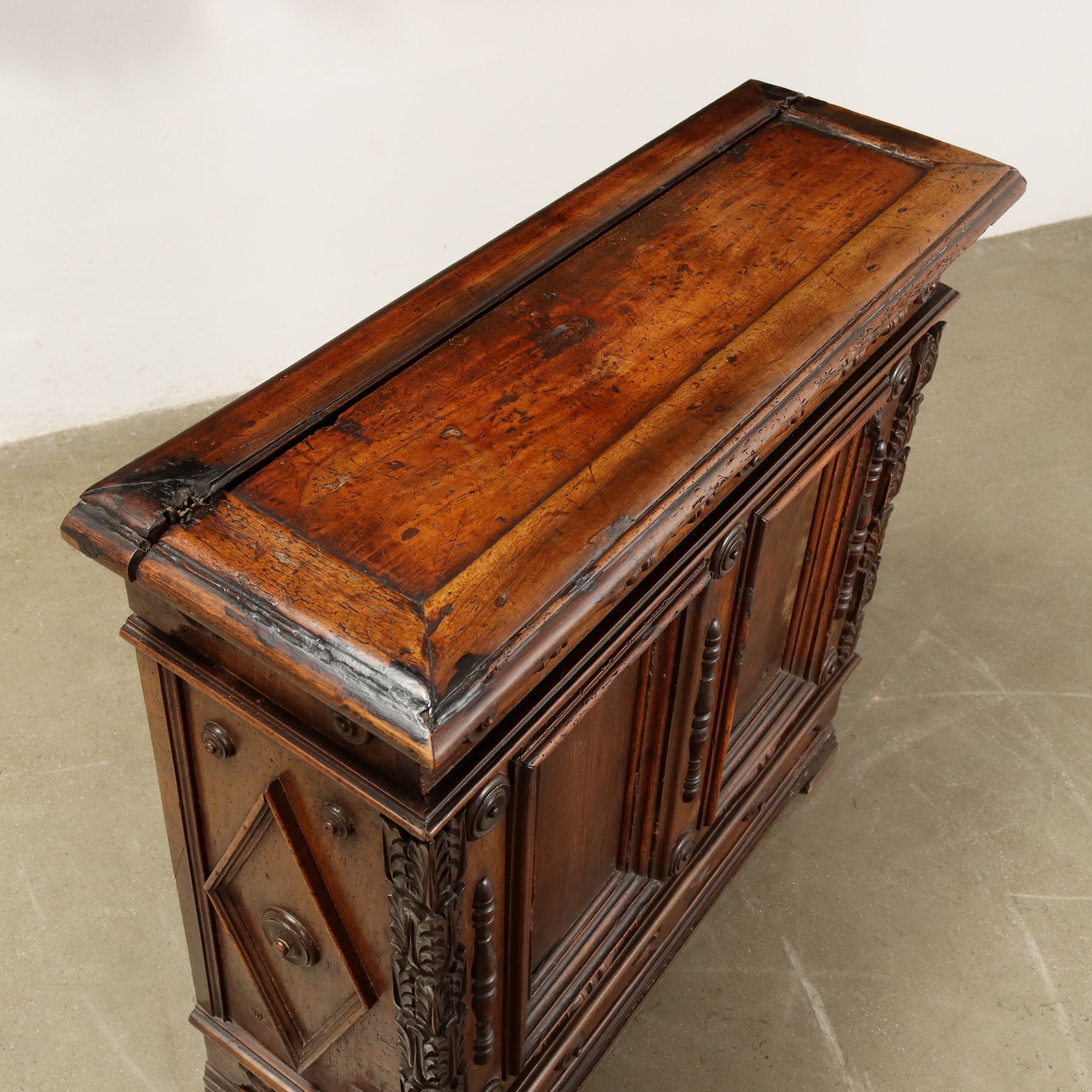
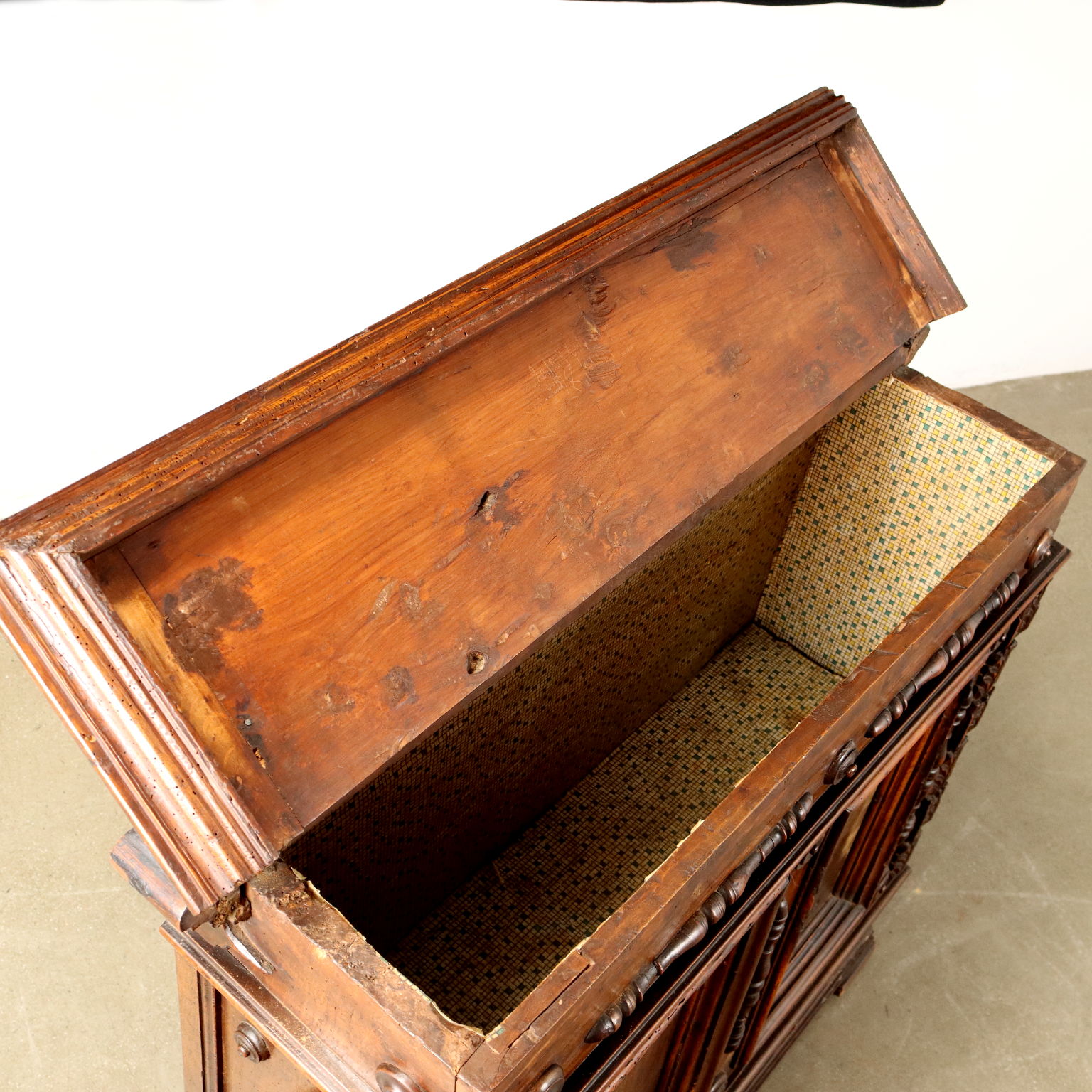
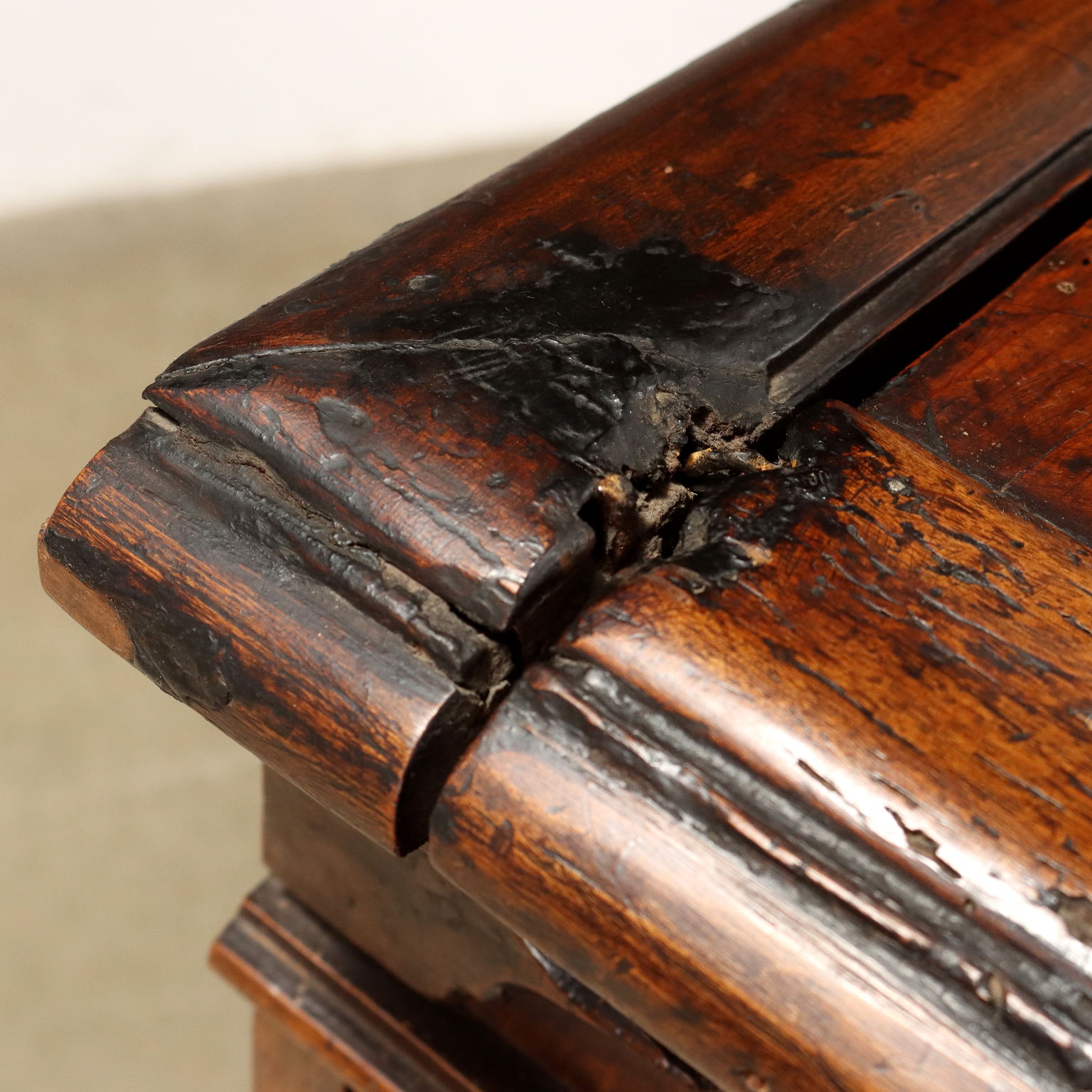
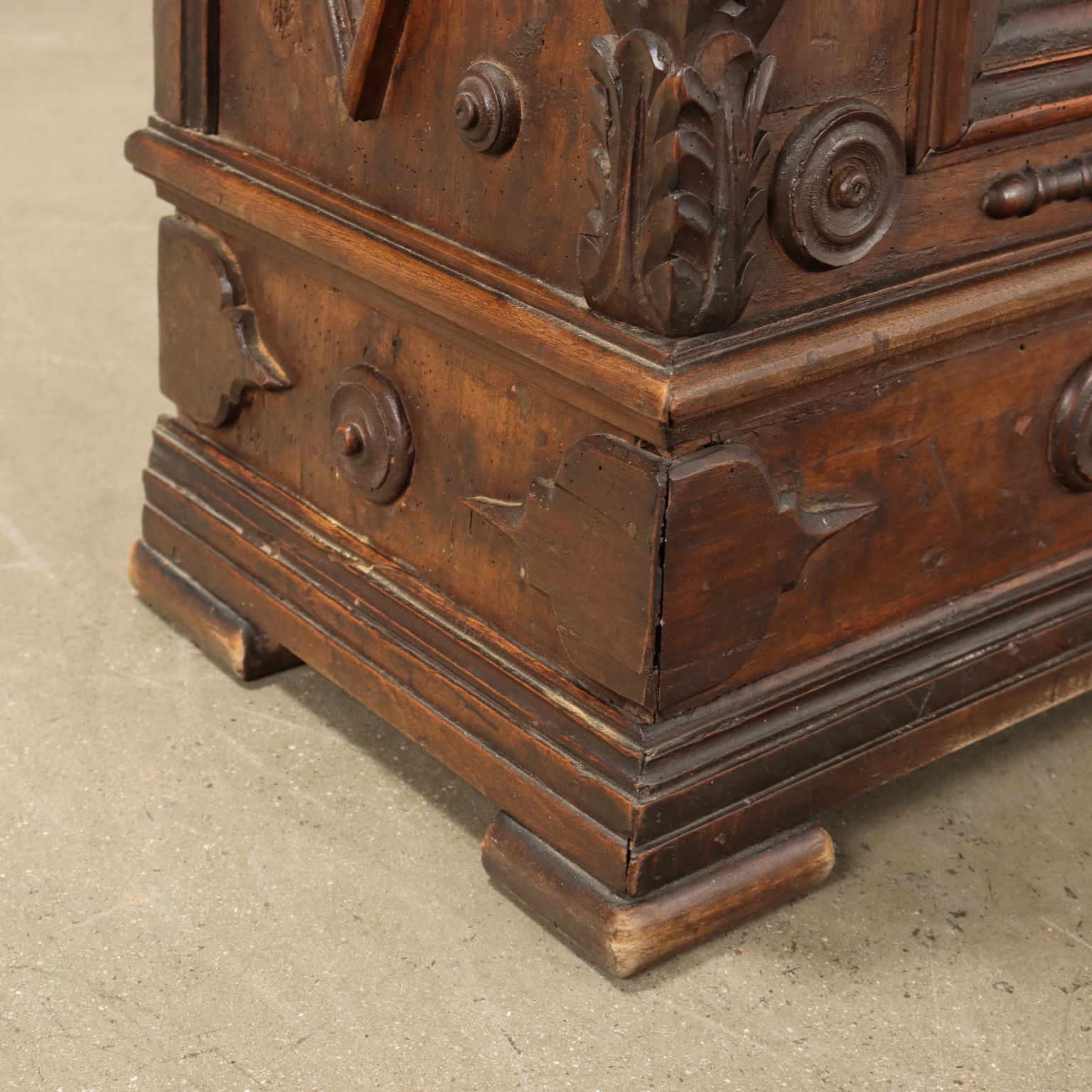
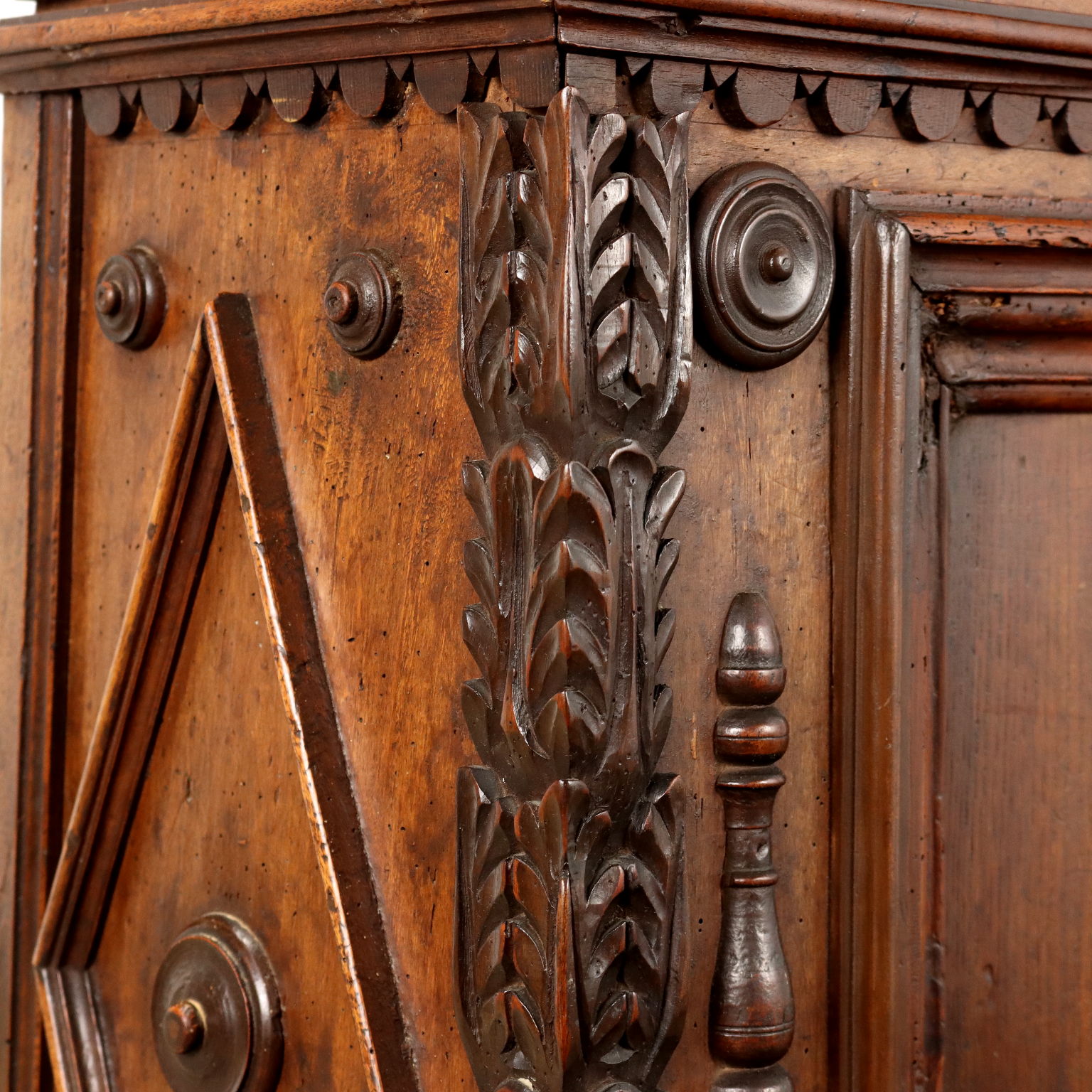
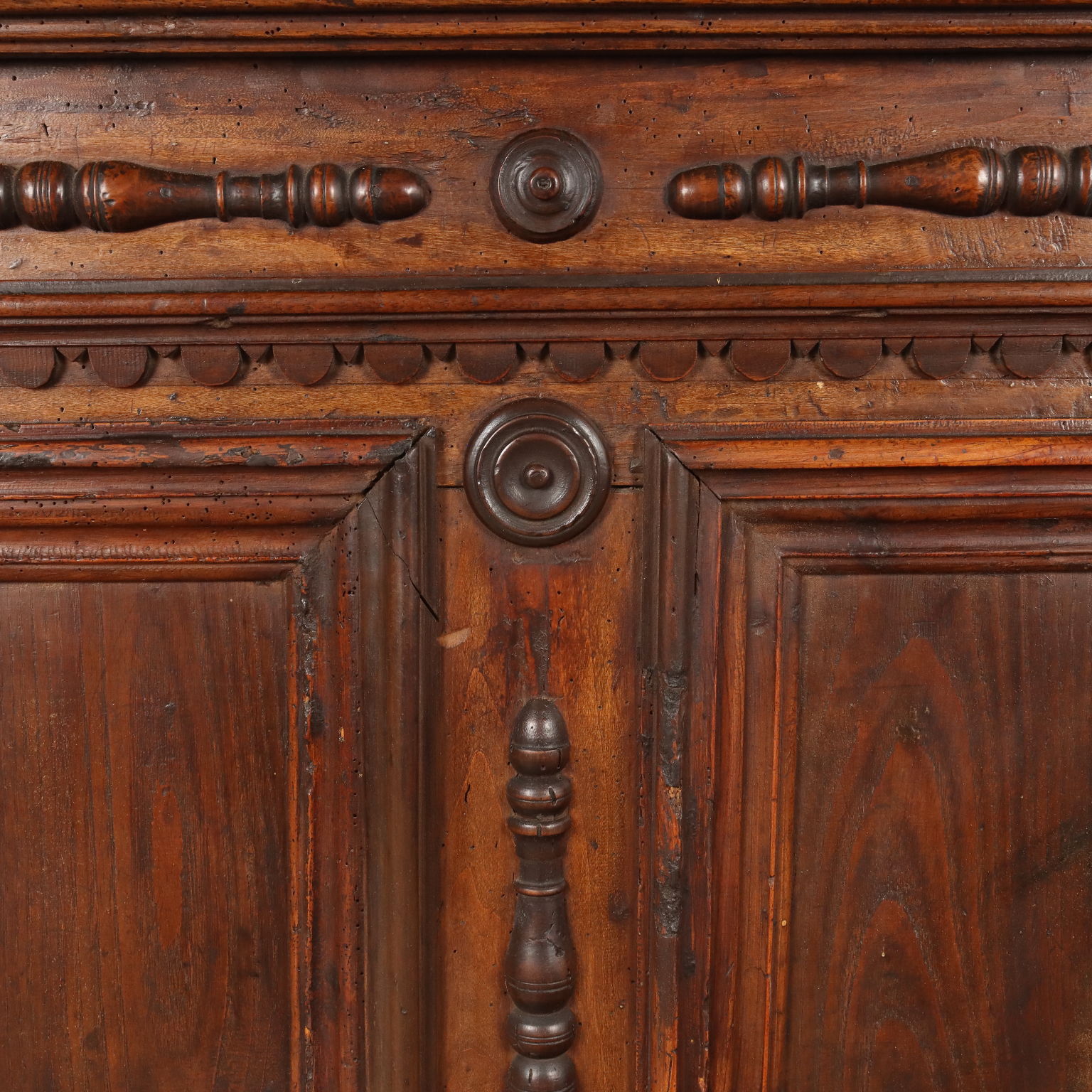
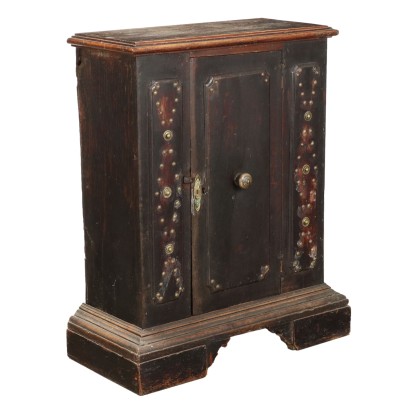
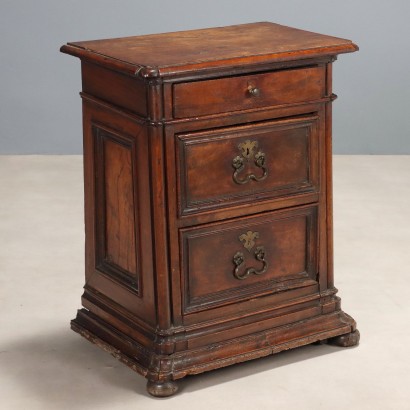
Baroque chest in chestnut and walnut, central Italy, early 18th century. Opening top, paneled front. The piece of furniture is decorated with a Greek fret, moldings, diamond-shaped frames, turned circular and fusiform elements and uprights carved with a leaf motif.
Product Condition:
Product that due to age and wear requires restoration and polishing. We try to present the real condition of the furniture as completely as possible with the photos. If some details are not clear from the photos, what is reported in the description is valid.
Dimensions (cm):
Height: 100
Width: 102
Depth: 38
Additional Information
Style: Baroque (1630-1730)
Read more
The term derives from the Spanish barrueco phoneme or Portuguese barroco and literally means "shapeless pearl".
Already around the middle of the eighteenth century in France it was synonymous with uneven, irregular, bizarre, while in Italy the term was of Medieval memory and indicated a figure of the syllogism, an abstraction of thought.
This historical period was identified with the derogatory term baroque, recognizing in it extravagance and contrast with the criteria of harmony and expressive rigor to which it was intended to return under the influence of Greco-Roman art and the Italian Renaissance.
Baroque, seventeenth-century and seventeenth-century were synonymous with bad taste.
As regards furniture, freedom of ideation, need for pomp and virtuosity gave rise to a synergy destined to produce unsurpassed masterpieces.
The materials used were worthy of competing with the most astonishing tales of Marco Polo: lapis lazuli, malachite, amber, ivory, tortoiseshell, gold, silver, steel, precious wood essences and more dressed the furnishings that in shape and imagination virtually gave life to the Arabian Nights of many of our powerful people.
Typical of the period were load-bearing or accessory parts resolved with twisted column motifs, clearly inspired by Bernini's canopy of St. Peter's, parts with rich sculptural carving in high relief and even in the round within a vortex of volutes, scrolls and spirals, curved and broken profiles, cymatiums agitated by gables of articulated shape, aprons adorned with ornaments, corbels, buttresses and so on. necessary to enliven shapes and structures.
The Baroque is also the century of illusionism: lacquers and thin temperas crowd furniture and furnishings to imitate with the marbling effects of marble veining or games of veining of precious briar roots.
Find out more about the Baroque with our insights:
Classic Monday: a double-body sideboard, late Venetian Baroque
Classic Monday: a pair of candle holders between the Renaissance and Baroque
Classic Monday: a pair of mirrors between Baroque and Late Baroque
Age: 18th Century / 1701 - 1800
18th Century / 1701 - 1800Main essence:
Chestnut
It is a hard, yellow-white wood, mostly used for rustic furniture. Since the Middle Ages it has been used in Europe, mainly in Spain, France and Italy. Particularly resistant, it was sometimes used to manufacture the supporting structures of fine furniture. It tends to darken over time and has good resistance to woodworms.Walnut
Walnut wood comes from the plant whose botanical name is juglans regia , probably originally from the East but very common in Europe. Light or dark brown in color, it is a hard wood with a beautiful grain, widely used in antique furniture. It was the main essence in Italy throughout the Renaissance and later had a good diffusion in Europe, especially in England, until the advent of mahogany. It was used for solid wood furniture and sometimes carvings and inlays, its only big limitation is that it suffers a lot from woodworm. In France it was widely used more than anything else in the provinces. In the second half of the eighteenth century its use decreased significantly because mahogany and other exotic woods were preferred.Material: Carved Wood
Other customers have searched:
Ecco qualche spunto dal nostro blog e da FineArt per scoprire di più sul tema credenze:
Leggi di più
Una credenza che dialoga con il passatoCredenza doppio corpo, tesoro di intagli e decorazioni
Piccolo stipo, grande arredo
Stipo toscano a cavallo tra XVI e XVII
Credenza Barium di Luciano Frigerio
Credenza, Mathieu Befort Jeune, Parigi, terzo quarto XIX secolo
Mobile anni '60
Highboard '503' Gianfranco Frattini per Bernini
Mobile bar anni '40
Mobile Bar anni '40 '50, manifattura italiana
Sull'antiquariato in generale dai un'occhiata anche a:
Classic Monday: da un pezzo dei nostri magazzini alla storia dell'antiquariato
L'antiquariato dalla A alla Z: il Dizionario dell'Antiquariato
Il dizionario dell'antiquariato - Lastronatura
Il dizionario dell'antiquariato - Mascherone
Il dizionario dell'antiquariato - Natura morta
Il dizionario dell'antiquariato - Opificio
Il dizionario dell'antiquariato - Pastiglia
Il dizionario dell'antiquariato - Savonarola
Il dizionario dell'antiquariato - Rosone
Product availability
The product can be seen at Cambiago
Immediate availability
Ready for delivery within 2 working days from ordering the product.
Central Italy, Early XVIII Century
Code: ANMOAL0251234
from 54.67 €/month for 15 months without interest Find out more








Information
Offers & PromotionsWithdrawal Form
Terms and Conditions
Privacy Policy
Cookie Policy
Update your Cookie Policy Preferences
Who we are
ContactsOur History
Di Mano in Mano Team
Our shops
Why choose Di Mano in Mano
Eviction Service
Shop Information
Di Mano in Mano Soc. Coop.
Register of Cooperative Companies at No. A114664
Contact us Now
Registered Office:
info@dimanoinmano.it
VAT Number: IT12896370157
Believe in Us
General Conditions of Use and Sale. Online dispute resolution according to Art. 14 (1) Regulation on consumer ODR.
European Commission provides a platform for online dispute resolutions (ODR) which can be accessed under: https://ec.europa.eu/consumers/odr/
We Ship With: